
Team members

Peter Dennebaum
A Protestant theologian and pastor coordinating Beyond, shaped by interreligious dialogue, social ethics, civil rights and the European peace project.
Read full biography — Peter Dennebaum
Born in Mainz in 1967; member of the Mainz Cathedral choir and graduate of the Episcopal Willigis secondary school. Formed by Catholic social teaching, particularly Oswald von Nell-Breuning.
Converted from Catholicism to Protestantism at the age of 20 and came out as a gay man.
Studied Protestant theology in Tübingen, Hamburg and Berlin (1989–1996), already focusing on interreligious dialogue and business ethics. Eugen Drewermann and Hans Küng continue to influence him.
Completed further training in human-resources management with a focus on staff development (1997).
Worked in human resources for Debis Systemhaus GmbH, Debis AG and Commerzbank (1997–2003).
Completed his ministerial traineeship in Herborn and Frankfurt am Main (2003–2006).
Moved to the United States, was ordained in the civil-rights-oriented United Church of Christ and served UCC congregations in New York and Washington, D.C. (2006–2012). He then returned to Germany to devote himself to the European peace project.
Served as a pastor in the Protestant Church in Hesse and Nassau in Gießen, Frankfurt and the surrounding area from 2013 to 2021.
Since 2022, adviser for community, church and social welfare at the SozDia Foundation in Berlin.
Since 2019, spokesperson for the federal “Christians” working group within Alliance 90/The Greens, coordinating interreligious work by progressive religious people across Germany and Europe. In late 2020, he helped establish the European Green Progressive Interfaith Coalition (EGPIC).
Building and coordinating Beyond. The European Network for Religious Progressives since 2017.
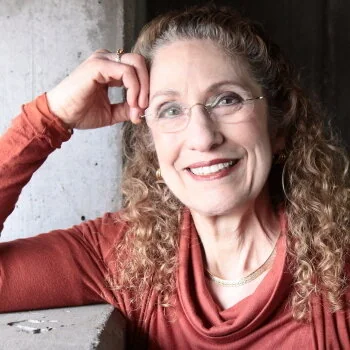
Leah Frey-Rabine
An opera singer and ordained cantor whose path connects Jewish memory, Jewish Renewal, music and an enduring search for spiritual belonging.
Read full biography — Leah Frey-Rabine
I was born and raised in Crosby, Minnesota, in the United States, far from any Jewish institution. I am grateful that my parents preserved a little Yiddishkeit at home, although in a way I would have described as “ethnic”: candles, wine and challah from distant St. Paul, together with a few holiday traditions.
As a child, I had at least a glimpse of the life my father’s family had once lived. Zeyde prayed every day. We went to the lake with him for Tashlich, and I remember him making Kiddush and singing “slach lanu” — one of the first melodies I knew. Yet my Jewish identity consisted above all in the fact that, in this multicultural mining region, we belonged to none of its many religious groups.
Jews wondered why my family wanted to live so far from other Jews — a mystery that still occupies me today. Why did my father’s family remain in Crosby after almost all the other Jews had moved away? Why did Zeyde not pass on his Jewish tradition? When clearing out my parents’ house, I found a box containing different prayer books, a Hebrew–Yiddish Tanakh, three tiny tallitot katanot and five pairs of tefillin, each in a bag embroidered with my father’s or my Zeyde’s initials.
Why did the thread break? What leads me to take it up, weave it back into the Jewish tapestry and add my own colours? Why did it take me so long, and why were the detours so wide? I feel like Parsifal.
Yes, Wagner — my other, parallel universe. I dreamed of it as a child and, as an adult, had the great good fortune to inhabit it as an opera singer. Did the deeper meaning of those archetypal figures set a string vibrating within me? Or did singing help satisfy my spiritual longing?
When I came to Germany in 1971, Jewish life in the country was beginning to reawaken. With a non-Jewish husband and our life in the theatre, keeping my distance was easy. After later changes in my life, it became increasingly difficult to hold my Jewish soul in check. In 2001 I found the Egalitarian Minyan in Frankfurt. There I came to know and value Daniel Kempin, the minyan’s prayer leader. He generously gave me the space I needed for the first steps on my new path. We respect one another and often study together; since then, a collegial partnership and a deep friendship have connected us and given much to both of us.
When Rabbi Elisa Klapheck joined us in 2004, she allowed me to lead parts of the services and taught me to chant from the Torah. Acutely conscious of how much I did not know, I worked purposefully to sing exactly the right words and notes. I gradually realised that I did not merely want to perform this music; I needed to go deeper. Rabbi Klapheck and Cantor Jalda Rebling encouraged me to get to know Aleph, the Alliance for Jewish Renewal.
During an indescribably wonderful first week at the Davvenen’ Leadership Training Institute, my soul and my self were able to find one another; my divided identity began slowly and harmoniously to take shape. It was the largest group of Jews I had ever experienced, and I simply belonged. I no longer laughed in disbelief when someone suggested that I should become a cantor. I began joking that I would build a bridge between Valhalla and Ohalah, the rabbinical and cantorial conference for Jewish Renewal. I scarcely dared believe I could reach that distant goal, but I pursued it with all my strength and indescribable joy.
In January 2014, Rabbi Zalman Schachter-Shalomi and Hazzan Jack Kessler ordained me as a cantor. My Jewish soul has found peace. I am profoundly grateful.

Waqar Tariq
A legal scholar and Liberal Islamic Association coordinator working at the intersection of constitutional law, religion policy, human rights and progressive Islam.
Read full biography — Waqar Tariq
Waqar Tariq studied law at Heidelberg University with support from the Friedrich Ebert Foundation and completed the First State Examination in Law. He completed his legal traineeship at Darmstadt Regional Court in the Frankfurt Higher Regional Court district and passed the Second State Examination in Law.
Since 2016, he has coordinated the Frankfurt community of the Liberal Islamic Association (LIB), and since 2017 he has served as an adviser to the association.
Areas of interest
- Constitutional law in general, particularly fundamental rights and principles of state structure
- Religion and constitutional law, including church–state law
- The establishment of Islamic theology at universities
- Religion policy
He is a permanent member of the State of Hesse’s Dialogue Forum Islam (current official information about Hesse’s integration bodies).
I have been a member of the Liberal Islamic Association since early 2015 because it succeeds, with ease and in an authentically Islamic way, in bringing religiosity together with progressive and liberal thought. Progressive and liberal positions are grounded in theology at the theoretical level and consistently lived in practice.
Beyond, in turn, offers the opportunity to connect interreligiously with progressive currents in other religions and to experience spirituality together. As the Qur’an emphasises (including surahs 5:48, 2:62 and 5:69), religious diversity is willed by God and enriches humanity.
Alongside their intrinsic value, religions can also help stabilise society and safeguard human rights, as the constitutional lawyer and legal philosopher Ernst-Wolfgang Böckenförde expressed succinctly in the dictum named after him.
Progressive religious movements in particular can — and must — join other civil-society actors in standing up for a Europe defined by democracy, the rule of law, human rights and the social state. These universal humanist values face growing danger in Europe as right-wing populism spreads. Religions, too, have a duty to offer an antidote to the poison of right-wing populism and other forms of hostility toward human beings, and to resist them. The Qur’an stresses that God appointed the human being as His steward on earth (“caliph”, Arabic khalīfah). Human beings therefore carry responsibility for this world. For religious people, indifference to the state of the world is not an option, nor is withdrawing into private ritual while the world outside burns.
With Beyond Frankfurt am Main, we are planting the seed of what we hope will become a Europe-wide network campaigning for a progressive Europe.
Selected publications
- “Islam und Menschenrechte – ein Widerspruch?”, in Lamya Kaddor (ed.), Muslimisch und liberal! Was einen zeitgemäßen Islam ausmacht, Munich 2020, pp. 84 ff.
- Commentary on Article 4 of the German Basic Law (freedom of faith and conscience), in Adrian Oswalt (ed.), VerfassungsKlänge – das Grundgesetz vertont, 2019. The former website is no longer available.
- “Das Islamische Grundgesetz”, in Religion – Weltanschauung – Recht [RWR], 2015, read the article online.

Matthias Becker
Bluebridges Senior Consultant and Intercultural Coach. Doctor of Law (Dr. jur.) from the University of Freiburg. Long-standing R&D HR leadership at Hoechst-Marion-Roussel, Aventis Pharma, and Sanofi-Aventis. Practitioner of Nichiren Daishonin's Buddhism within the SGiD since 1989.
Read full biography — Matthias Becker
Education
- Studies in Business Administration, Law, and Philosophy
- Doctorate in Law (Dr. jur.) from the Albert Ludwigs University of Freiburg
Professional Career
- 1989 – 1993: Research Assistant in the Department of Public and Constitutional Law, University of Freiburg
- 1995 – 1998: Officer in the Labor Law Department of the Chemical Employers' Association for the State of Hessen; designed and led executive training programs on labor law, conflict management, and communication
- 1998 – 2000: Head of R&D HR, Hoechst-Marion-Roussel
- 2000 – 2004: Head of R&D HR, Global Lead Generation, Aventis Pharma
- 2004 – 2008: Deputy Head of Global HR and Organizational Development R&D, Sanofi-Aventis
- 2009: Director of Global Change Management R&D, Sanofi-Aventis
Buddhist Practice
Practitioner of Nichiren Daishonin's Buddhism within the SGiD since 1989.